Pocket Chess – Chess Puzzles
- 4.5
- Rating
- 1.00M
- Installs
- Free
- Price

 Analysis by App-foxy
I opened Pocket Chess – Chess Puzzles expecting a compact way to practise tactics rather than a full replacement for a chessboard. That expectation turned out to be exactly right. This free board game from Lessmore GmbH focuses on short chess problems, so the main experience is not building an opening repertoire or playing a long match against another person. It is about looking at a position, finding the strongest move, seeing the response, and deciding whether I want to try another one.
That simple loop is the reason I can imagine keeping it on my phone. A spare minute becomes useful when I am waiting for a bus, taking a break, or trying to wake up my calculation skills before an actual game. The app is listed for Everyone, works from Android 6.0 onward, and has reached over a million installs. Those details fit its role well: it is approachable enough for casual players, but its value depends on whether you enjoy thinking through positions without needing a complete chess platform around them.
How the puzzle loop feels in everyday use
I find the puzzle loop easiest to use when I treat each position as a small calculation task, not a race to tap a move. Taking a moment to name the opponent’s strongest reply can make a quick phone session more useful, especially when I’m interrupted or playing in short bursts. That naturally raises a practical question: how can I make the first few minutes feel smooth and focused?
You May Also Like

 Blood Strike: 2.5 Anniversary
Blood Strike’s Loadouts Turn Every Drop Into a Tactical Gamble
A close look at Blood Strike’s custom loadouts: how fast access to signature weapons reshapes its battle royale rhythm, rewards preparation, and narrows the gap between fights.

 Pandora - Music & Podcasts
Pandora’s Music Is Easy to Start, but Harder to Recover
Pandora’s strength is its low-effort path from a seed to a station. Its weak spot is how much confidence it asks you to place in connection, setup, and quiet recovery.

 8 Ball Pool
 Is Built on Rivalries, Rematches, and Routine
A close look at the rivalries, rematches, shared routines, and unanswered safety questions that turn a quick pool match into a persistent mobile community.

 Samsung Music
’s Quiet Strength Is Playing What You Already Own
Its reach comes less from spectacle than from dependable access to a personal library. That simplicity is both the app’s strongest retention engine and its ceiling.

 AccuWeather: Weather Radar
AccuWeather Review: A Quick, Clear Forecast for Everyday Decisions
For everyday plans, the best forecast is the one you can understand quickly. AccuWeather makes rain timing, radar, and local conditions easy to act on, with a few trade-offs.

 Hill Climb Racing
Why Hill Climb Racing Still Turns Crashes Into One More Run
A tiny car, a bumpy hill and one more upgrade: Hill Climb Racing keeps resurfacing because its simple chaos makes every near-miss feel personal.
More From Our News Desk



The first action is deliberately small
The important thing about this game is that it gets me to the chess position quickly. I do not need to commit to a full match, choose a time control, or wait for an opponent. I look at the board, identify the side to move, and begin searching for the tactical idea. That first action sounds ordinary, but it changes the mood of practice. Instead of asking whether I have enough time for chess, I only need to ask whether I have enough attention for one position.
My usual approach is to resist the temptation to move immediately. I first scan checks, captures, and threats, then I look at the opponent’s most forcing reply. This makes the puzzles more useful than simply tapping the first attractive move. The app supplies the position, but I still have to create a small thinking routine around it. For a newer player, that is a practical way to learn that chess puzzles are not just about spotting a shiny capture.
The board format also makes the game suitable for touchscreens. Moving a piece is more direct than entering notation, and that matters when I am using one hand. Still, a phone screen can make detailed calculation harder than a physical board or a large tablet. Pieces, squares, and possible lines are all compressed into a small space. I found that I had to slow down when several pieces were crowded around the king, especially if I was playing in a noisy environment.
This is not the right first choice for someone who wants a complete online chess service. If your priority is live play, matchmaking, tournament rooms, extensive game analysis, or a large social community, a dedicated chess platform will be more suitable. Pocket Chess – Chess Puzzles is narrower by design. Its strength is that it removes everything except the decision in front of me.
Feedback arrives through the position, not a lecture
The most satisfying part of the rhythm is the immediate consequence of a move. I choose an idea, the position reacts, and I can see whether my calculation survived contact with the puzzle. That action-and-response pattern keeps the experience active. I am not reading a long explanation before doing anything; I am testing a hypothesis on the board.
When I solve a problem, the feedback is useful because it confirms more than the first move. A tactical solution often depends on noticing what happens next: a king is forced away, a defender disappears, or a piece becomes trapped. Seeing the continuation helps me understand why the move worked. I try to replay the line mentally after solving it, rather than immediately rushing to the next position.
When I miss, the friction is more valuable if I treat it as a diagnostic. I ask whether I overlooked a check, failed to examine the opponent’s reply, or moved too quickly because the first move looked natural. That makes the app work well as a calculation exercise, but it does not replace structured coaching. Players who need an explanation of a tactical theme, a lesson sequence, or a detailed breakdown of every mistake may find the feedback too lean compared with a chess-training course.
A useful habit is to separate recognition from calculation. On the first pass, I name the possible motif in my head: a fork, pin, discovered attack, mating threat, or overloaded defender. On the second pass, I calculate the exact line. The app’s short format supports this two-stage method because I can focus on the board without being distracted by a long game. It also exposes a weakness: if I only guess familiar patterns, I may feel quick without becoming more accurate.
The large audience suggests that the basic format is easy to understand. The game holds an average rating of 4.5 from around 47 thousand ratings, with roughly 3.7 thousand written reviews. I would not treat those figures as proof that every player will enjoy it, but they do match my impression that the core interaction is clear and accessible. The real question is not whether the game is complicated to operate; it is whether its focused practice matches the kind of chess improvement I want.
Why solving one problem makes another session tempting
The reward here is less about collecting a dramatic prize and more about the small satisfaction of being right. I see a position, commit to a move, and receive confirmation that my reading of the board was sound. That is a clean reward because it connects directly to the skill I am practising. I do not have to finish a long match to feel that I accomplished something.
For me, the best use is a short sequence of deliberate attempts. I might solve one puzzle carefully, then try another while the pattern is still fresh. If I succeed too quickly, I increase the challenge by calculating one move deeper before touching the screen. If I fail, I pause and reconstruct the position. This turns the reward from a simple correct-or-incorrect moment into a small learning cycle.
The free entry point is important. I can test the experience without paying first, which makes sense for a puzzle game that depends heavily on personal taste. There are in-app purchases ranging from $1.99 to $26.99 per item, so I would approach optional spending with a clear purpose rather than assuming that buying something automatically improves my chess. A casual user can start free, while a committed player should decide whether any paid content fits a regular practice plan.
One trade-off is that a puzzle reward is naturally narrower than the reward from a complete game. In a full match, I practise opening choices, time management, endgames, and adapting to another person. Here, the reward is concentrated around tactical decision-making. That concentration is excellent when calculation is my target, but it can create a false sense of progress if I never apply the ideas in real games.
I get more from each success when I write down the reason the move worked in plain language. For example, I might note that the defender was overloaded or that a check forced the king onto a vulnerable square. This is a small workflow change, but it prevents the app from becoming a stream of disconnected victories. The position becomes a lesson I can remember, not just a problem I cleared.
The reset is what keeps the game lightweight
After a puzzle ends, the app’s appeal comes from the clean reset. I do not need to preserve a complicated match state or schedule a large block of time. I can stop after one position and return later, or continue while I still have the concentration to calculate properly. That makes it especially convenient for people who want chess practice to fit around an unpredictable day.
I tested the idea in an ordinary situation: I had a few minutes before leaving home and did not want to start a full game. A puzzle gave me a clear beginning and an equally clear stopping point. If I had won or lost a long match, I might have felt pressure to continue. With a short problem, closing the app felt natural. That ability to end cleanly is one of the strongest reasons to keep a puzzle-focused game installed.
The reset also makes repeated attempts less intimidating. If I miss a tactic, the mistake belongs to one position rather than an entire evening of chess. I can take a breath, identify the overlooked detail, and begin again with a different board. For newer players, that matters because a difficult full game can feel like a single extended failure, while a puzzle separates practice into manageable decisions.
There is a downside to the same convenience. Short sessions can encourage shallow tapping. I sometimes catch myself treating the next puzzle as the reward before I have understood the current one. My solution is simple: after every mistake, I spend longer reviewing the position than I spent making the move. If I cannot explain the tactical point without looking at the board, I do not count the puzzle as fully learned.
Players should also think about the setting. A phone is excellent for portability, but not always for deep analysis. If I am tired, distracted, or rushing between tasks, I may guess instead of calculate. In those moments, a physical board, a larger screen, or a focused lesson can be better. The game is easy to start, but serious improvement still requires serious attention.
Where it fits beside ordinary chess alternatives
Compared with playing against a friend, Pocket Chess – Chess Puzzles removes the social element and gives me a more controlled exercise. That is a benefit when I want to practise a specific skill without worrying about the opponent’s clock or personality. It is a limitation when I want the emotional pressure and unpredictability that make real games difficult.
Compared with a chess book, the app is faster and more interactive. I can act on the board instead of studying a printed diagram and writing down variations. A book may still be better for a carefully explained theme, a progressive curriculum, or a deep collection of annotated games. I see this app as the place for frequent repetition, while books and lessons provide the broader structure.
Compared with a full chess app, it is more focused and less distracting. I do not open it intending to play a match and accidentally spend a long time browsing unrelated features. That focus is valuable for tactical maintenance. On the other hand, a full platform is the better choice if I need opening databases, engine analysis, online opponents, saved games, or a way to measure improvement across different parts of chess.
The current version is 0.33.1, and the developer is Lessmore GmbH. I would keep the app updated through the normal store process, particularly because puzzle apps can change their content or presentation over time. I would also remember that the Everyone rating describes the intended audience, not the difficulty of every position. A child can use a chess puzzle app, but younger players may still benefit from an adult explaining notation, check, and why a move is legal.
Who will enjoy it, and who should skip it
I recommend it most to casual chess players who already know how the pieces move and want a compact tactical workout. It is also a good companion for someone who plays online games but notices recurring mistakes such as missing forks, ignoring checks, or failing to see a back-rank threat. The short format makes it easy to build a routine without promising that every session will feel like formal study.
Beginners can use it, but I would not make it their only chess resource. If the basic rules are still uncertain, a guided lesson will probably teach more efficiently than jumping straight into positions. The app becomes more rewarding once I can understand why a move is legal and what the opponent is threatening.
I would skip it if my main goal is to play other people from the phone. I would also look elsewhere if I need detailed explanations after every failed attempt, a complete training plan, or broad support for openings and endgames. Those are not small preferences; they change what “useful chess practice” means. This game is at its best when I want a focused board problem, not an all-in-one chess ecosystem.
My practical recommendation is to use it with a simple three-step routine: calculate before moving, explain the result afterward, and connect the idea to a recent game. If I solved a fork puzzle, I look for a moment in my own games when two pieces were left vulnerable. If I missed a mating threat, I review whether I checked the opponent’s forcing moves. That bridge from puzzle to real game is where the app earns its place rather than becoming another disposable time-filler.
My verdict on the complete action-feedback-reset cycle
Pocket Chess – Chess Puzzles succeeds because its loop is easy to understand and easy to repeat. I take the first action by choosing a move, receive feedback through the opponent’s response and the result, enjoy the reward of recognising the tactical idea, and then get a clean reset for the next position. The next session begins because the previous one ends without demanding a large commitment.
I like that balance. The game respects short pockets of time, costs nothing to begin, and keeps the board at the centre of the experience. Its limitations are equally clear: it is not a substitute for playing complete games, studying explanations, or following a broad improvement programme. Its in-app purchases also mean I would decide carefully before spending, especially if free practice already covers my needs.
With its Everyone age rating, support for Android 6.0 and later, and a strong 4.5 average from a substantial player base, it is an approachable choice for the right kind of chess player. My final view is straightforward: choose it for repeated tactical practice, not for a complete chess life. If you want a pocket-sized board that gives you one meaningful decision at a time, I would recommend giving it a try.
FAQs for Pocket Chess – Chess Puzzles
01What is Pocket Chess – Chess Puzzles?
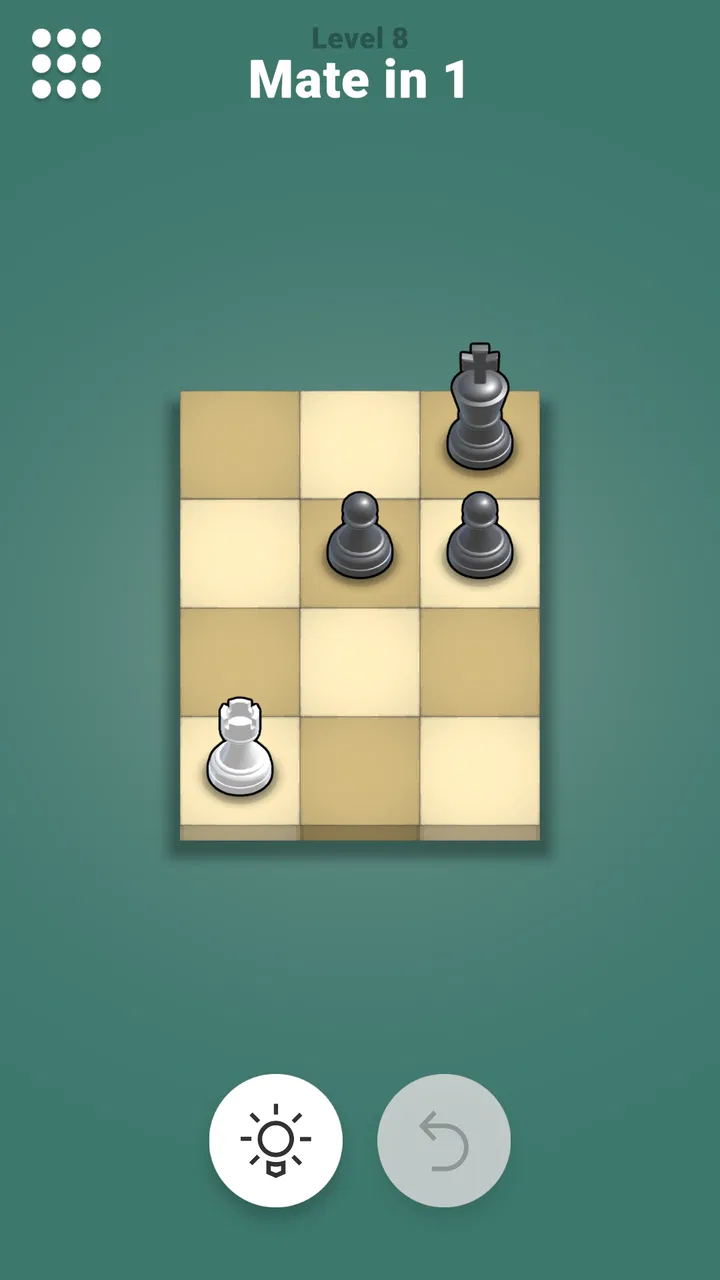
Pocket Chess – Chess Puzzles is a mobile puzzle game focused on short chess challenges rather than complete traditional matches. Each level presents a tactical position in which you must find the best move, often involving checkmate, winning material, or escaping a difficult situation. It is designed for quick sessions and can be useful for players who want to practice pattern recognition and tactical thinking on Android or iOS.
02Is Pocket Chess suitable for beginners?
Yes, Pocket Chess can be suitable for beginners, especially those who already understand the basic movement of the chess pieces. The puzzle format lets new players learn common tactical ideas without needing to manage an entire game from the opening to the endgame. However, some challenges may become difficult quickly, so beginners may need patience and should review the position carefully before using hints or trying another move.
03Does Pocket Chess – Chess Puzzles require an internet connection?
Many puzzle-based chess apps are designed to allow at least part of the content to be played offline, which makes them convenient for travel or short breaks. Nevertheless, internet access may be required for downloading levels, synchronizing progress, displaying advertisements, receiving updates, or accessing optional features. Before relying on offline play, it is recommended to open the game once while connected and check which puzzles and functions remain available without a connection.
04Is Pocket Chess free to download and play?
Pocket Chess – Chess Puzzles may be available as a free download, but the exact business model can depend on the platform and current version. Free access may include advertisements, optional purchases, locked puzzle packs, or other premium features. Users should review the Google Play Store or App Store listing before downloading to confirm whether the game contains ads, in-app purchases, subscriptions, or restrictions on the number of puzzles available without payment.
05What can I learn by playing Pocket Chess – Chess Puzzles?
The game can help improve practical chess skills such as spotting checks, identifying tactical threats, recognizing mating patterns, and calculating short variations. Because each challenge usually focuses on a specific position, it encourages you to examine forcing moves before making a decision. It should not replace full games, opening study, or endgame practice, but it can be a useful companion for building tactical awareness through frequent, focused exercises.
Pros
- Short puzzles make it easy to practice during brief breaks.
- Progressive difficulty keeps the challenge engaging for regular players.
- Useful for improving tactical vision and pattern recognition.
- Clean interface lets you focus on the board and possible moves.
- Suitable for beginners and experienced players seeking extra practice.
Cons
- Some puzzles may feel repetitive after extended sessions.
- Advanced content may require in-app purchases or additional access.
- It offers limited value if you prefer full competitive chess games.
- A mistake can require replaying a puzzle instead of exploring alternatives.
- Puzzle quality and difficulty may vary between different challenge sets.

Pocket Chess – Chess Puzzles
Gallery